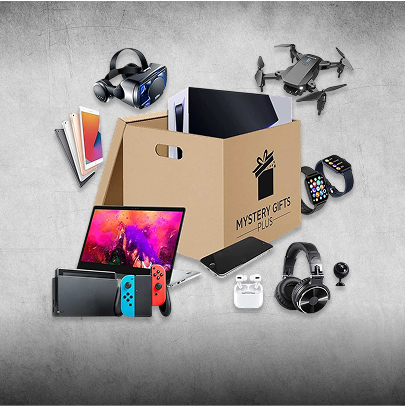



Royal Mail Undelivered Parcels for Resale
AdminA bundle of Royal Mail undelivered parcels is not a ready-made profit guarantee. It is mixed clearance stock: the appeal is the low buying cost, the variety of goods and the chance of finding items worth far more than the box or pallet price. For resellers, that can mean fresh listings for eBay, Vinted, TikTok Shop, a market stall or a local shop. For bargain buyers, it is a lower-cost way to buy into the surprise of unclaimed and undelivered stock.
The sensible approach is to buy for the average value across the lot, not for the one item you hope is inside. Some parcels may contain useful brand-new goods, while others may hold low-value products, opened packaging or items that need testing. Sort properly, price realistically and treat every lot as stock that needs work.
What are Royal Mail undelivered parcels?
Royal Mail undelivered parcel stock generally refers to parcels that have passed through the delivery network but could not be delivered to, collected by or reunited with their intended recipient. The exact reason can vary. Addresses may be incomplete, recipients may not collect an item, labels may be damaged or a parcel may be returned through a clearance route after the normal handling process.
Once stock enters a liquidation or clearance channel, it is commonly sold as mixed, unmanifested parcels. That means there is no item-by-item inventory telling you precisely what is inside. Buyers are purchasing by format, weight, quantity or lot size rather than selecting individual products.
This is what creates both the opportunity and the risk. A mixed parcel lot can include household goods, accessories, clothing, small electronics, beauty items, toys, tools and everyday online purchases. Equally, it can include duplicates, low-ticket products, damaged outer boxes and goods with little resale demand. Contents are not guaranteed, and anyone selling a lot as though every parcel contains high-value items is setting the wrong expectation.
Why resellers buy undelivered parcel joblots
For a seller who needs affordable stock, undelivered parcels offer a practical alternative to buying new wholesale lines in deep quantities. A traditional wholesale order often requires choosing a single product, committing to a minimum order and waiting for demand to build. Mixed clearance parcels let smaller sellers test several categories at once.
That matters if your sales channels are varied. A branded garment may suit Vinted, a sealed phone accessory might move on eBay, and a useful household item could sell quickly from a market stall. One joblot can give you stock for more than one platform without tying all your cash into one category.
There is also a straightforward entry point. Smaller return boxes and mystery bundles make sense for first-time buyers who want to learn their local market and listing process. Larger cages, pallets and wholesale joblots suit traders with storage, sorting space and a proven route to sell volume. The best format depends on how quickly you can process goods, not simply how much stock you can afford to buy.
Royal Mail undelivered parcels: what to expect
Expect a mixture of conditions. Some items may be new and sealed; others may be in opened packaging, show handling marks, be incomplete or require a clean and test before resale. An undelivered parcel is not automatically a customer return, but clearance stock of this type is still mixed stock. It should be bought on that basis.
Packaging is not the product. A crushed carton can hold a perfectly saleable item, while a neat-looking parcel may contain a product that is unsuitable for resale. Open parcels carefully, keep a basic stock record and assess each item individually before listing it.
It is also worth planning for stock that will not make your chosen sales channel. You may find an item is too cheap to photograph and list individually, too bulky to post economically or missing a part that prevents it being sold as working. Those products may be better grouped into a clearance bundle, sold locally, used as market-stall stock or recycled where appropriate.
The margin is made in the sorting. Buyers who simply open a box and expect instant profit often underestimate the time involved. Buyers who photograph clearly, test items, write accurate descriptions and bundle lower-value products have a better chance of turning mixed stock into cash.
Choose the right buying format
A small box is a sensible place to start when you are learning. It limits your exposure and lets you see whether mixed parcel stock suits the way you work. You can practise checking condition, researching completed sale prices and learning what actually sells in your area.
A larger bundle or pallet can reduce the cost per item, but it increases the operational side of the purchase. You will need space to receive it, somewhere dry to sort it and enough time to process it before it becomes clutter. A pallet is not automatically better value if half of it sits unopened for months.
Before buying, work backwards from your selling plan. Think about the likely average selling price, selling fees, postage, packaging, refunds and the value of your time. If you sell mainly online, compact products are often easier to handle than large, fragile goods. If you run a shop or market stall, mixed household and impulse-buy items may be useful even when individual online margins are modest.
Buyers Hub offers clearance stock in different commitment levels, from accessible mixed boxes to larger pallets and joblots. The useful choice is the one that matches your budget, storage and route to market - not necessarily the biggest lot available.
How to sort a parcel lot for profit
Make sorting your first job after delivery. Do not leave parcels stacked in a corner and assume you will get around to them later. The faster you identify sellable goods, the sooner your money starts working again.
Set up separate areas for new or sealed items, tested working products, goods needing further checks, bundle stock and items that should not be sold. This keeps your listings accurate and stops good stock being mixed back in with rejects.
For electrical goods, check the item carefully before resale. Look for damage, test functions where safe and practical, and do not describe anything as working if you have not verified it. Remove personal data from any device where relevant. If an item has safety concerns, missing essential parts or signs of damage, do not pass the problem on to your customer.
When listing, be plain about condition. Say whether packaging is opened, whether an accessory is missing and whether an item is tested or untested. Clear descriptions reduce returns, protect feedback and help buyers trust your future listings. A £12 honest sale is better business than a £20 sale that comes back with a complaint.
Keep the numbers realistic
The headline value of an item is not the same as its resale value. A product might have once retailed at £50, but if it is opened, common, out of season or expensive to post, its realistic sale price could be much lower. Check what similar items are actually selling for rather than relying on original retail prices.
Build an allowance for non-sellers into every purchase. Even well-bought mixed stock can include items you cannot sell individually. The aim is for your better finds and steady everyday sellers to cover the lot cost, fees and labour, leaving a margin after the less useful stock is dealt with.
A simple method is to track your total purchase cost, then record each item sold and the net amount received after marketplace fees and postage. Over several lots, you will see which categories, formats and sources work for you. That information is more valuable than one lucky high-value find.
Buy the opportunity, not the story
Undelivered parcel stock is attractive because it is varied, unpredictable and often priced below conventional retail routes. That same unpredictability means it is not right for someone who needs exact products, guaranteed brands or perfect condition on every item.
For resellers prepared to sort, test, photograph and move stock quickly, it can be a useful source of fresh inventory. Start at a level you can process, keep enough cash aside for selling costs and judge each lot by the return across the whole batch. The parcel you did not expect may be a bonus, but disciplined buying is what turns clearance stock into a repeatable resale opportunity.